
Wise Design reframes a historic kitchen for modern living.
Interior Designers: Ryan Harkrider & Bonney Johnson, Wise Design
Contractor: Sheller & Sons
Cabinetry: George Ramos Woodworking
Tile: Tempest Tileworks
Photographer: Seppi Reda
From the moment the Wise Design team first stepped inside their clients’ charming 1917 Portland Heights pied-à-terre, the home revealed its quiet grandeur: original floors and trim, a fireplace rich with character, and a private veranda overlooking lush grounds.
The kitchen, however, told a different story. Small and cut off from the main living and dining spaces, and accessible only through a central hallway, it bore the marks of a disjointed 1960s renovation. Still, hints of its original soul remained, including a stretch of tile wainscoting — just enough to suggest what once was.
The homeowners had called in Wise Design with a clear vision: to craft a kitchen that honored the home’s rich history with period-appropriate details while improving utility and flow, all within a mere 100 square feet of space. Other units in the building offered case studies for what various homeowners had done to optimize their own small kitchens. Some had removed the entire wall blocking the living and dining space to create an open floor plan.
“This felt too contemporary, and we wanted to honor the historic nature of the kitchen being its own separate space,” says designer Ryan Harkrider of Wise Design, who worked on the project along with designer Bonney Johnson.
Others had kept the walls in place and created U-shape kitchens with new cabinetry. While this solved the issue of available counterspace, it left those spaces feeling overly constrained. Wise Design’s solution — a daring move that seemed almost counterintuitive to making a smaller kitchen larger — proved to be most effective: the addition of a new large, cased opening connecting the kitchen to the dining room. The original hallway entrance was preserved, allowing natural light to flow into what would otherwise be a dark corridor, while the new opening dramatically improved circulation.
With the layout resolved through connection rather than expansion, the design team was able to work with, instead of against, the kitchen’s size. Embracing the philosophy of building better, not bigger, the compact footprint allowed the homeowners to invest in exceptional materials and craftsmanship.
“Material selections were made with a deep respect for the architecture, guided by the goal of returning the space to its former glory while still elevating it for modern living,” Johnson says.
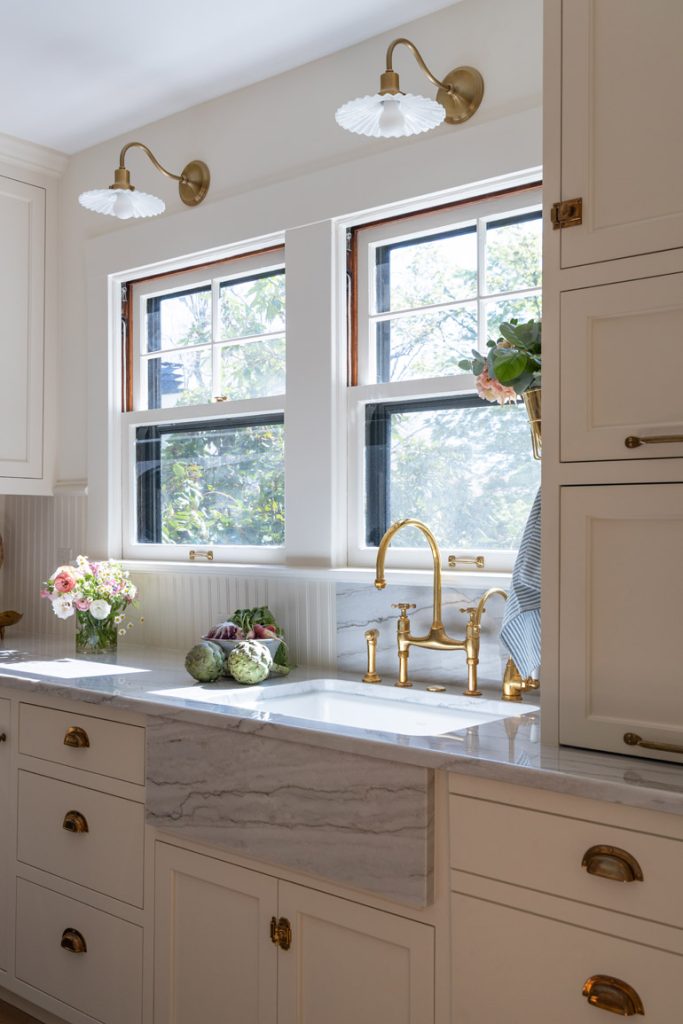
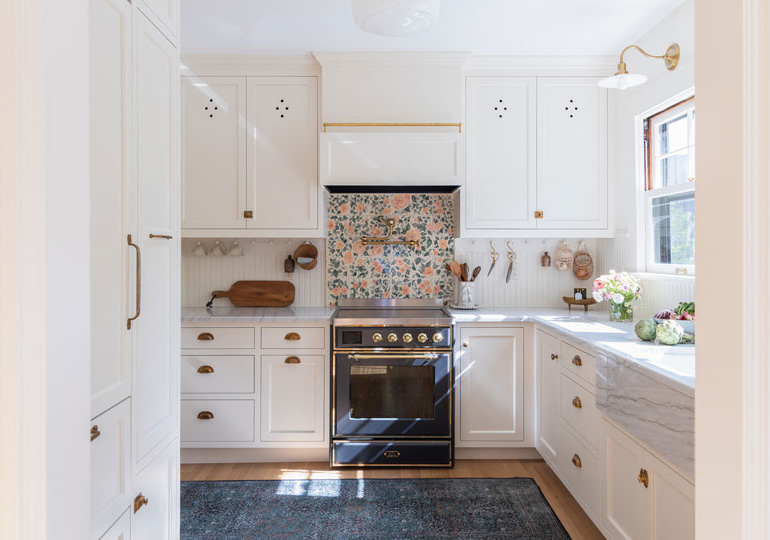
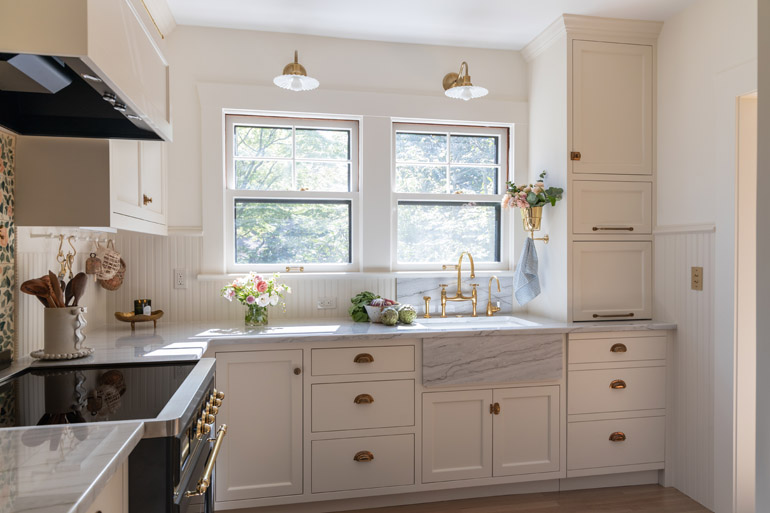
Inset shaker cabinetry with a paneled fridge and dishwasher, all fabricated by cabinetmaker George Ramos, feature traditional flourishes that echo early 20th-century artistry and set the tone for quiet luxury. Continuing the theme of understated richness, Lavezzi quartzite was used not only for the countertops, but also for the sink apron and backsplash.
“Sinks are so often thought of as purely utilitarian, and don’t regularly get an opportunity to dress up a bit,” Johnson says. “This one was given a touch of elegance, making it feel considered rather than overlooked.”
High-end appliances, including an ILVE range, blend performance with classic styling, while warm, brass details like the rail on the range hood, pot filler, and hardware — all sourced from deVOL — reinforce the kitchen’s timeless sensibility. Custom detailing through the beadboard, traditional peg rails, and artfully placed cabinet vent holes — an eye-catching feature that the homeowners themselves coordinated with Ramos — add texture and authenticity without competing for attention. Together, these elements establish a calm, layered backdrop that allows a single, carefully chosen moment to take center stage.
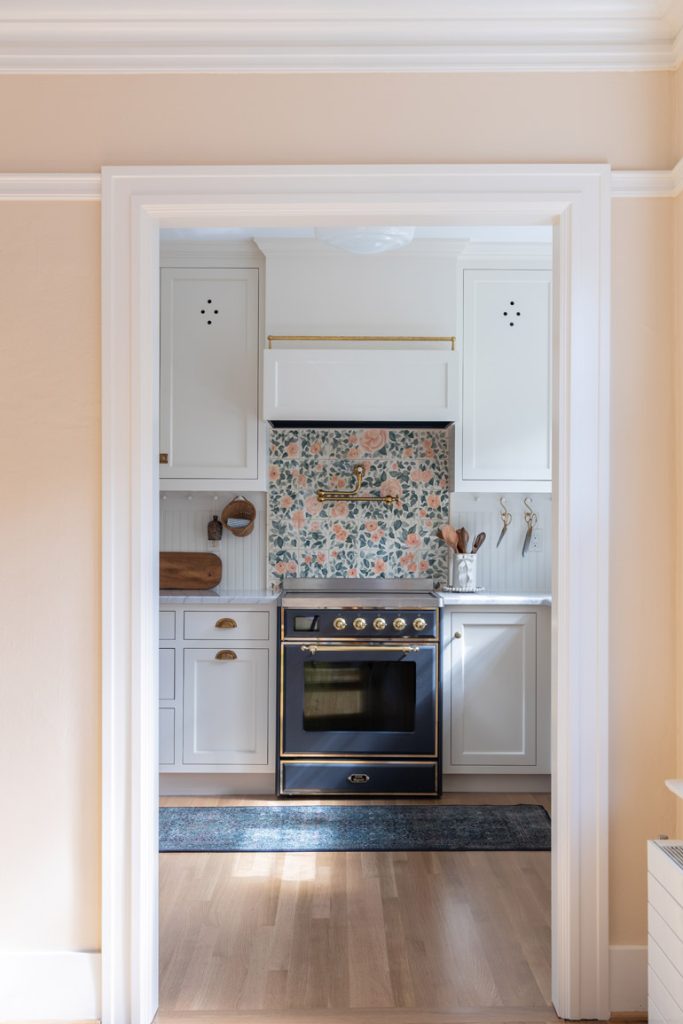
Thanks to the cased opening addition, the view from the dining room now centers directly on the striking new range tile, the kitchen’s true showstopping moment. Created by Portland-based Tempest Tileworks in close collaboration with the homeowners, the one-of-a-kind, hand-painted floral mural was designed specifically for the space. Framed with a delicate beaded edge, the installation reads as both a focal point and a piece of art — an expression of the homeowners’ taste and the collaborative spirit behind the renovation.
“Our clients have incredible style and are transforming their home into a beautifully layered space for the two of them,” Harkrider says. “This space is entirely theirs.”
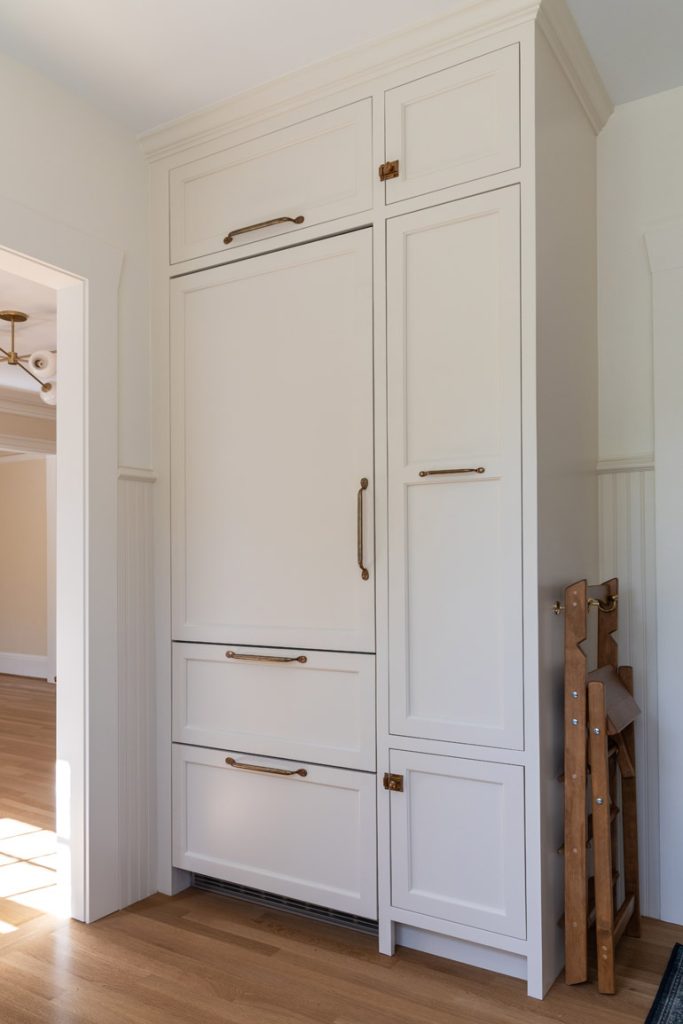
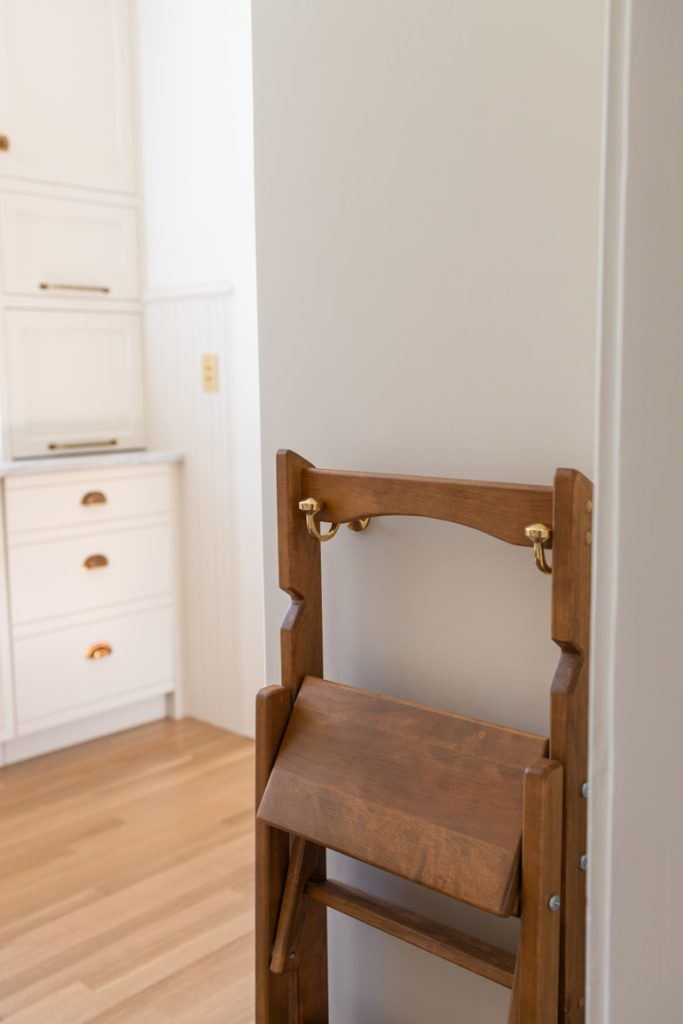
“One of my favorite elements is the wood ladder with two little brass hooks for it to hang just off the floor, ready to be grabbed at a moment’s notice,” Harkrider says.