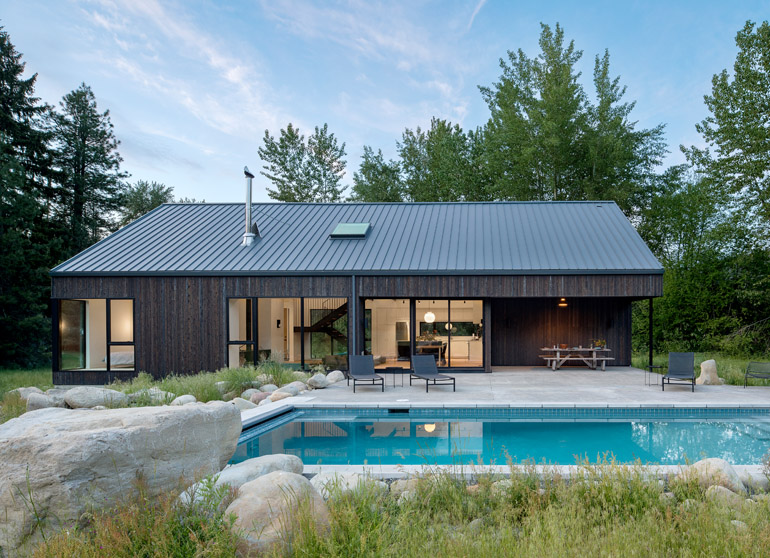

Risa Boyer Architecture designs a woods-swathed modern barn retreat for two families.
Architect: Risa Boyer Architecture
Photographer: Jeremy Bittermann / JBSA
Structural Engineer: Grummel Engineering
Windows and Doors: Portland Millwork
Bathroom Vanities: Artisan Woodworks
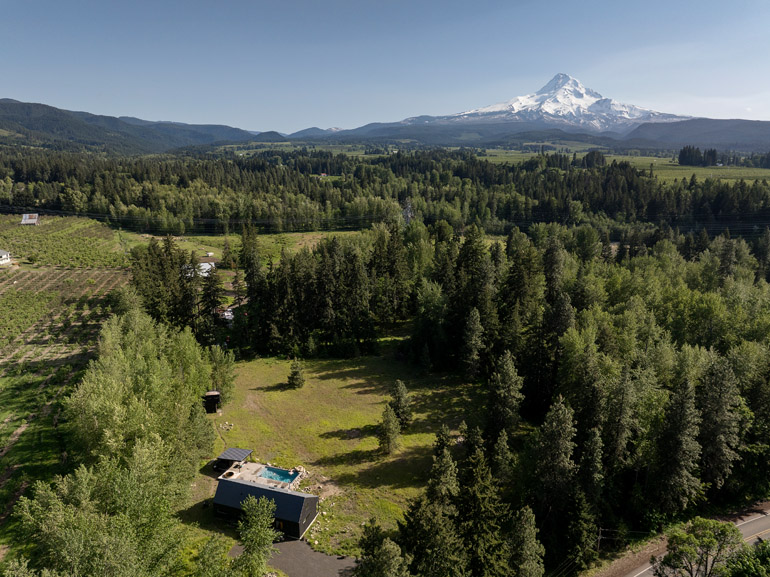
Architect Risa Boyer had been looking with her family for a property near Mt. Hood for seven years, but their wish list was different than most. They wanted the peace and serenity of being surrounded by woods, but they also longed for a valley setting, with its feeling of abundance. They found it in an 11-acre property formerly known as Ziba Dimmick State Park, an abandoned swath of land abutting the East Fork River near Parkdale.
“It was magical wandering through the woods and discovering these different environments on the 11 acres,” says Boyer, of Portland-based Risa Boyer Architecture. “Going in on the property and then the project with another family and keeping the costs down allowed us to make this dream happen.”
Ziba Dimmick State Park flooded in late 1980 and was sold by Hood River County in 1981 before going up for sale again in 2017. During the families’ first visit, they could still access the old asphalt parking area, overgrown and covered with leaves and surrounded by cottonwoods and pine trees. They wandered the site on overgrown trails and climbed a 15-foot embankment to find the 4-acre meadow where they ended up camping for a few years in Airstreams and, eventually, building the house.
“I loved the smell of the woods, the natural light, and the view of an orchard and the hills beyond,” Boyer says.
The two families understood from the beginning that it was a site that could pose a challenge for most, but they brought to it their backgrounds in architecture and general contracting. The property had recently undergone a land-use review before being put up for sale. It would need septic, had no electricity and needed many considerations to protect it from flooding.
“It was pretty clear that it wouldn’t be a site that most people could work with,” Boyer says.
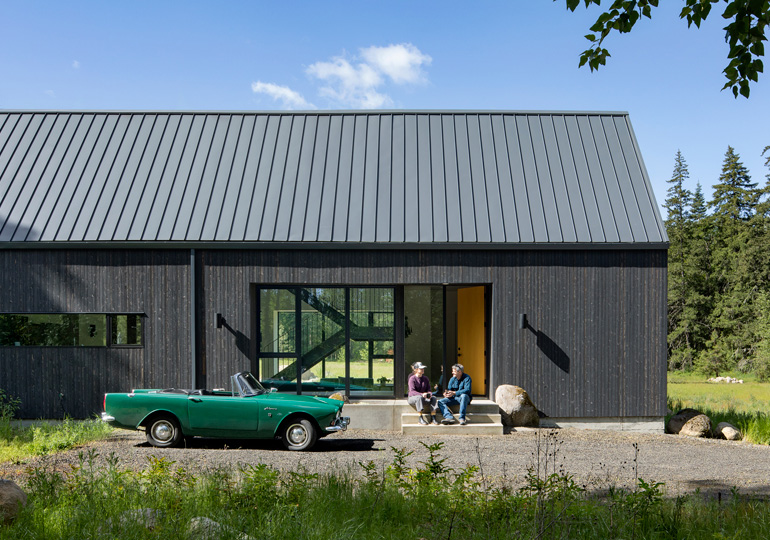
Together, the team planned for a sleek, modern retreat reminiscent of the barns of Hood River’s Fruit Loop. Their overall goal was to create a serene space connected to nature but within a smaller budget, one that could accommodate a group while allowing for solitude.
“There’s something about a valley that makes me feel at home and relaxed,” Boyer says.
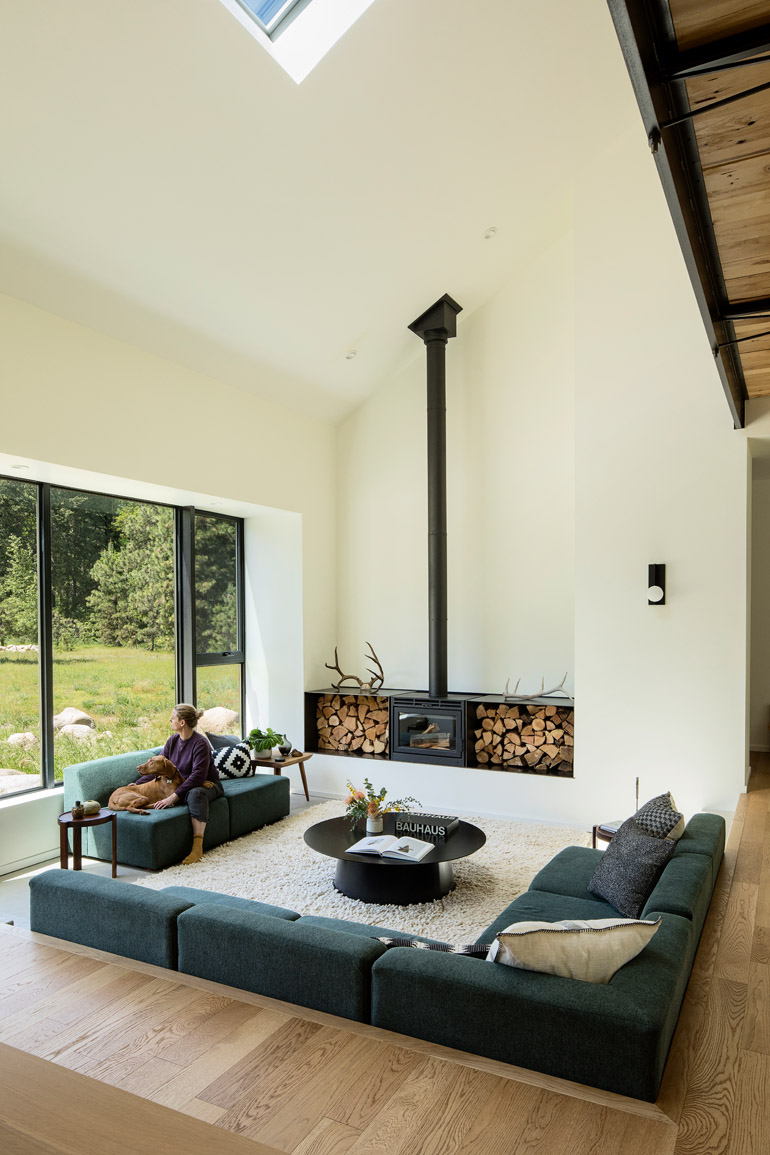
Designing the floor plan, Boyer accounted for both families’ needs and preferences, deciding on a setup that would accommodate two couples and, together, their three kids, while allowing each group to have some privacy.
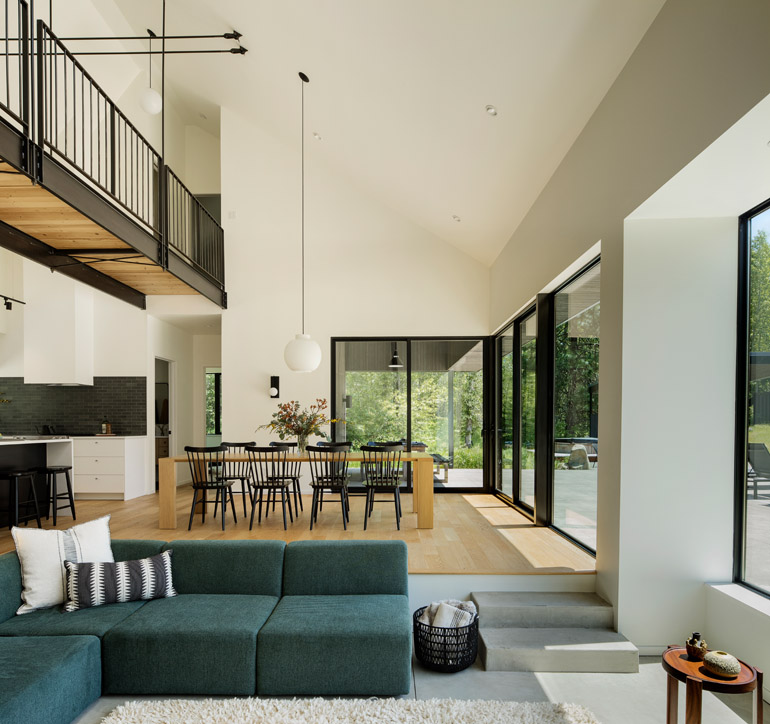
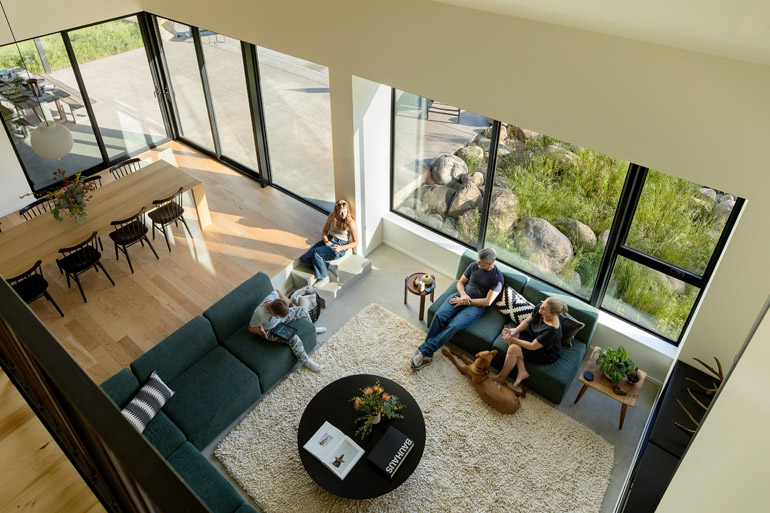
A sense of calm pervades the home inside and out. Boyer sank the living room to create a spot perfect for rest—reading, lounging, morning coffee, afternoon naps and evenings around the fire.
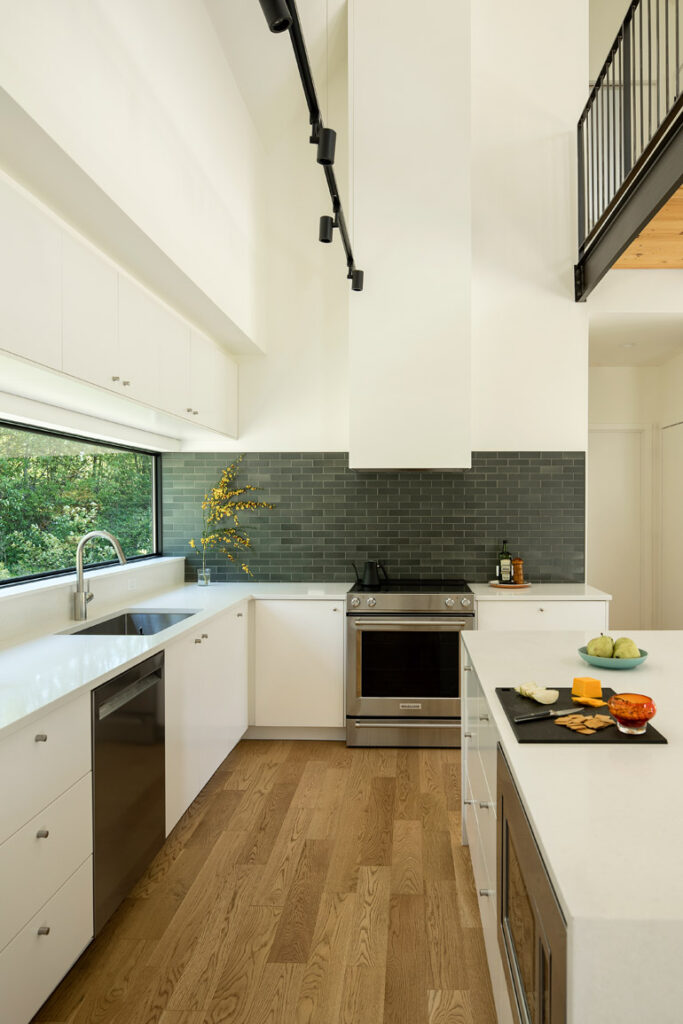
In the kitchen, Boyer set a long window at eye level that carries around with a view to the woods. Inside, she repurposed leftover tile from another project, and went with IKEA cabinets and countertops for their functionality.
“This is the second IKEA kitchen we’ve done,” Boyer says. “They are durable, and for the cost, it’s a great deal.”
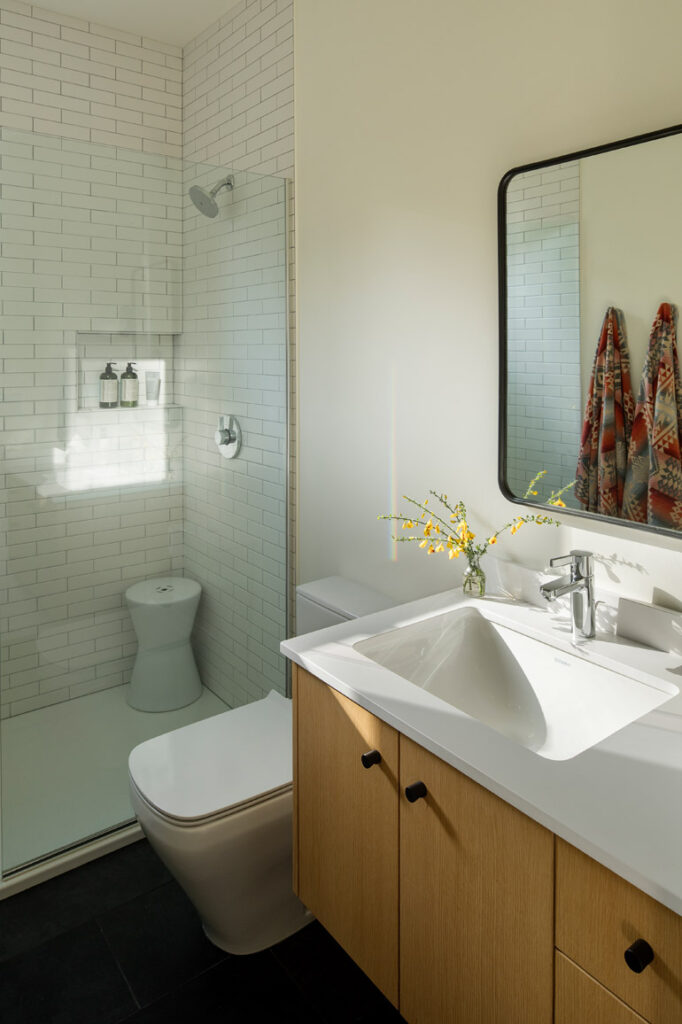
Materials in two similar bathrooms were kept simple and functional with slate floors and a minimal palette to enhance the calm factor.
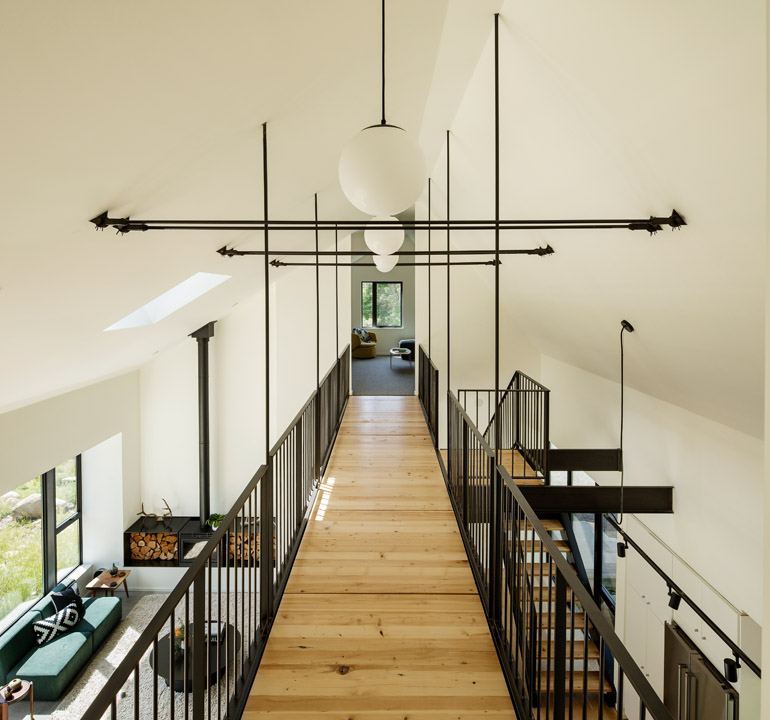
Boyer collaborated with Grummel Engineering to design the bridge connecting two of the upstairs spaces, the upstairs hangout space and the bunk room, with a bridge hung by thin steel rods just ¾-inch in diameter.
“It’s actually supported by those rods, attached to hefty hidden beams—with all of that weight, we needed the cross collar ties,” Boyer says.
Outside, a swimming pool and a cedar soaking tub allow for family and friends to have fun in Oregon’s hot summer season. Inside, Boyer amped up protection from the elements with a tight building envelope, fiberglass windows, and spray-foam insulation, a heat pump water heater and furnace (which also heats the pool in the summer).
The two families undertook much of the construction and finishing work themselves, making it a project not unlike a modern barn-raising—an event including an entire community to make it happen.
“I feel really lucky every time I go out there,” Boyer says.