
How furniture, rugs, lighting and art can transform your sense of place, no contractors required.
Photography by Nick Shafer Photography
Growing up, my mom would rearrange our family home every two or three years, usually during one of the winter blizzards when we were stuck inside. We’d carry all the furniture out of a room and take everything off the walls before putting it back in a new configuration that somehow made space for the movie posters I’d bought with my allowance. It was an early lesson that a home doesn’t need to be remodeled to feel entirely new. Sometimes all it takes is seeing familiar things in unfamiliar places.
Contractors shape the bones and systems of a house. They create the entries, hallways and rooms, and protect you and your belongings from the elements. But a room is just a room. You decide what it’s for, what activities take place there and how it will be used. One person may want a guest bedroom, while another dreams of a home office, theater, gym or nursery. In the design world, we refer to this as space planning. It’s the unseen framework that organizes a house to support how the people who live there actually want to live.
Within that framework, furniture, rugs, lighting and art shape how we experience a space. Furniture signals how to inhabit a room. Rugs encourage you to linger. Art changes what you notice. Lighting underpins how you feel. Once you understand how these elements work together, you can begin using them intentionally to make your home feel more welcoming, cozy and joyful.
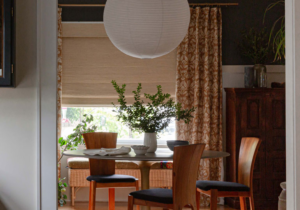
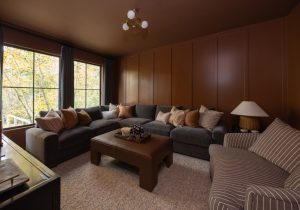
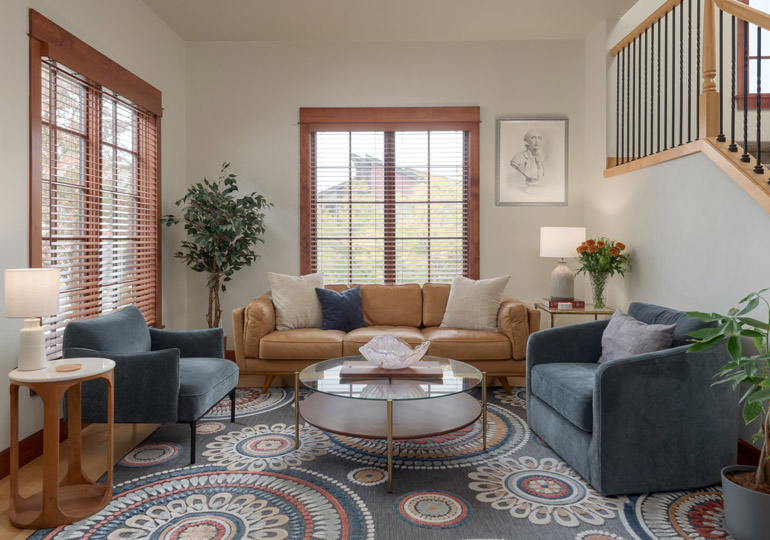
What furniture is in a room — and how it’s arranged — determines whether people gather, linger, converse or simply pass through. A well-designed room begins with understanding how it will be used, then selecting furniture that supports those activities. If the room is meant for reading, for example, it needs at least one chair that’s comfortable enough to sit in for hours.
With very few exceptions, scale is more important than style. Think of it like a tailored suit or dress: You’re more likely to notice when the fit is off than the quality of the fabric. The same is true of furniture. Beautiful pieces rarely succeed if they’re the wrong size for the room.
Weekend Experiment
- Remove everything from the room.
- Only return the pieces that earn their place.
- You’ll quickly discover which furniture contributes to the room and which merely occupies it.
- If an essential piece is clearly too small or too large, replace it with something that’s the right scale.
Area rugs serve two important functions. First, they tell your brain where one place ends and another begins. Second, they help you feel grounded, which naturally makes a space more comfortable.
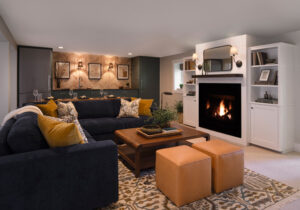
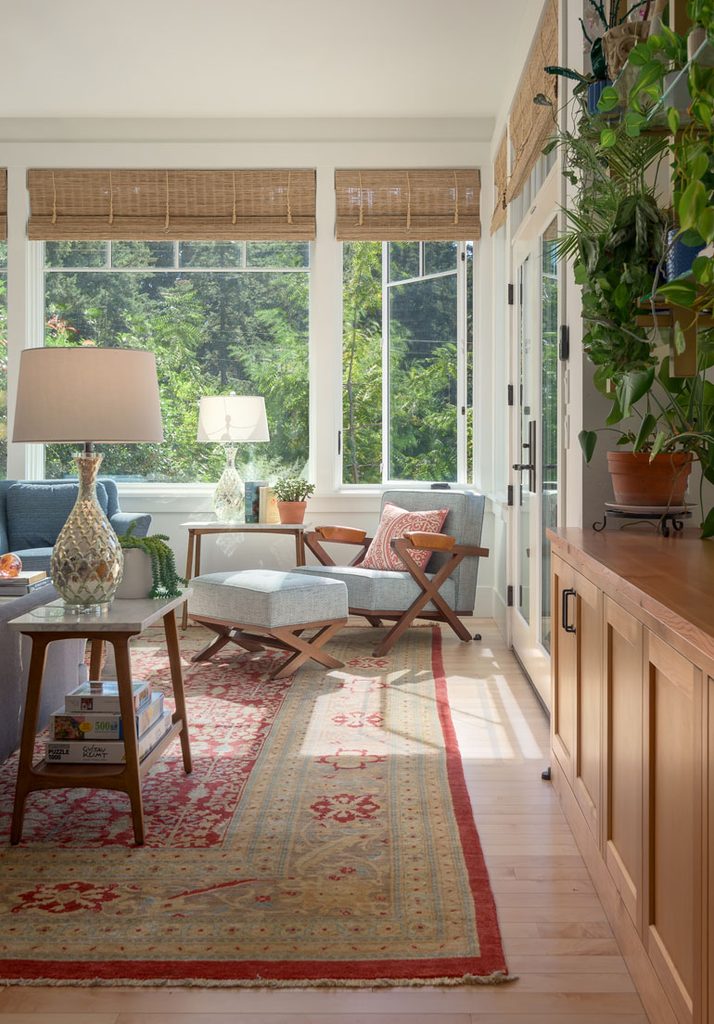
When a room has a hard floor surface (wood, tile, vinyl or concrete), designers often use area rugs to define furniture groupings. A well-placed rug signals that the chair, side table and floor lamp belong together and should be experienced as a single destination rather than as unrelated objects.
Rugs also soften acoustics and provide insulation underfoot, making a space feel quieter, warmer and more intimate. When selecting a rug, pay attention to pile height. A rug with a pile greater than half an inch feels noticeably plusher and more inviting to sit or stretch out on.
Weekend Experiment
- Look closely at your room’s furniture groupings.
- Try adding a rug beneath a grouping that doesn’t already have one. Play with size and shape until it feels right for the room.
- Try swapping an existing rug for one with a taller pile or a richer texture.
Art is perhaps the most personal object in a home, because no one chooses it for purely practical reasons. It reflects what matters to the people who live there and offers moments of daily beauty and delight.
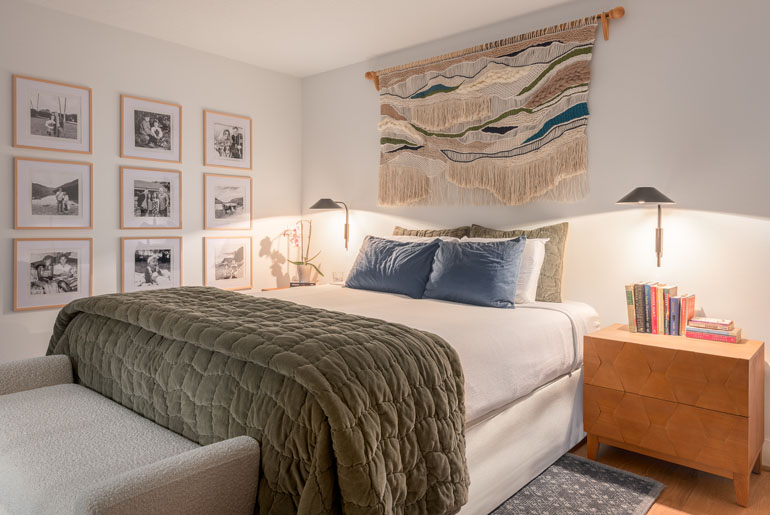
When thinking about what belongs on your walls and shelves, don’t limit yourself to paintings. I’ve seen wonderful collections built from ceramics, woven textiles, family photographs, vintage maps and even children’s artwork.
Placement matters just as much as selection. I like using art to create focal points: at the end of a hallway, directly across from a doorway, or to anchor a favorite seating area, such as a reading chair beside a window.
Weekend Experiment
- Take the existing artwork off your walls.
- Temporarily move pieces around to create new focal points.
- Fill any obvious gaps with something unexpected.
- Hang everything in its new location, then patch and touch up any exposed nail holes.
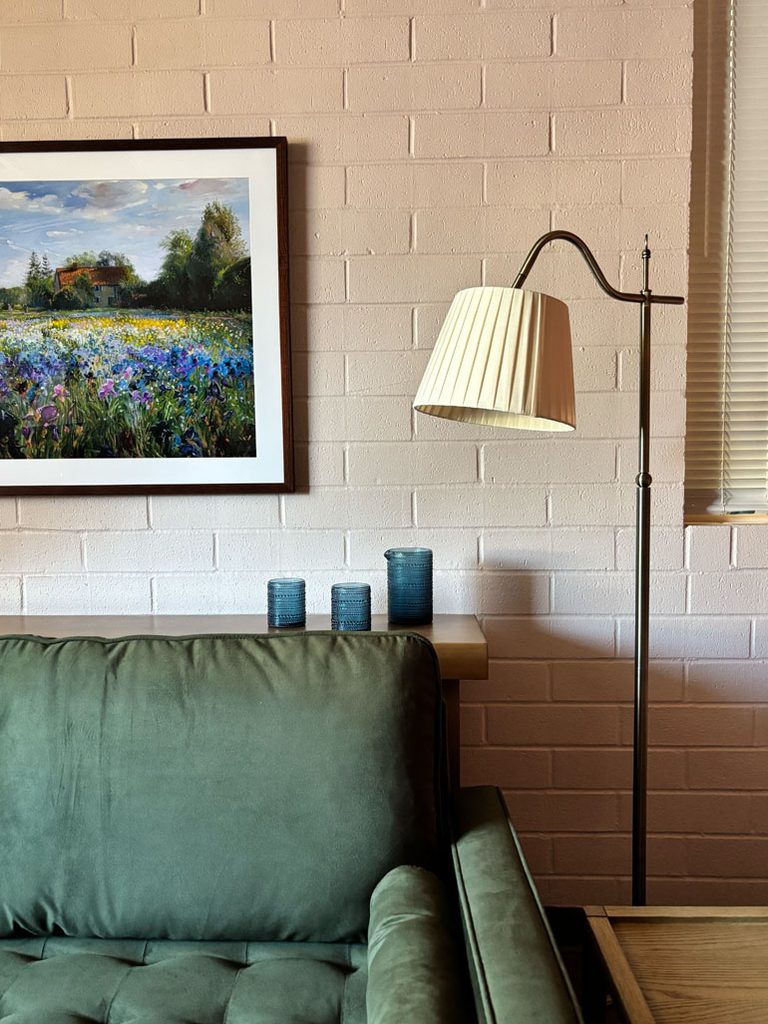
Lighting tells your nervous system whether it’s time to focus, celebrate or unwind. If you’ve ever walked into a room and immediately felt something was off, there’s a good chance the lighting was part of the problem. Harsh exposed bulbs, fixture placement that casts unflattering shadows and mismatched color temperatures all contribute to that subtle feeling of discomfort.
Designers generally think about lighting as serving three distinct roles. Ambient lighting provides overall illumination and allows people to move comfortably through a room. Task lighting supports specific activities, like reading or preparing food. Accent lighting highlights artwork, emphasizes architectural features and reinforces furniture groupings, bringing depth and life to a space.
Whenever possible, I recommend installing dimmers on hardwired fixtures so light levels can be adjusted throughout the day and across the seasons. Just as important, use the same color temperature for every bulb within a room. We rarely remember how bright a room was, but we remember how it felt after sunset.
Weekend Experiment
- Add a few table or floor lamps where light feels flat.
- Check the color temperature of every bulb in the room (measured in Kelvin).
- Replace mismatched bulbs so they all share the same color temperature.
Through understanding how these elements work together, you can intentionally create rooms that feel joyful and easy. I’m a firm believer that every home deserves a cozy place for reading, catching up on the news or calling an old friend.
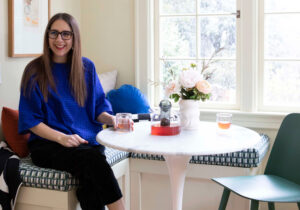
Imagine a comfortable chair beside a window. A rug beneath your feet. A small table holding a cup of tea or a glass of wine. A reading lamp casting a warm pool of light across the pages. One piece of art that always catches your eye.
None of these choices require a construction permit, yet together they create something far more meaningful than a renovated room: a place you can’t wait to return to.
Rory Everitt Design is a full-service interior design firm focused on refining and elevating magnificent homes throughout Oregon. Learn more at roryeveritt.com.